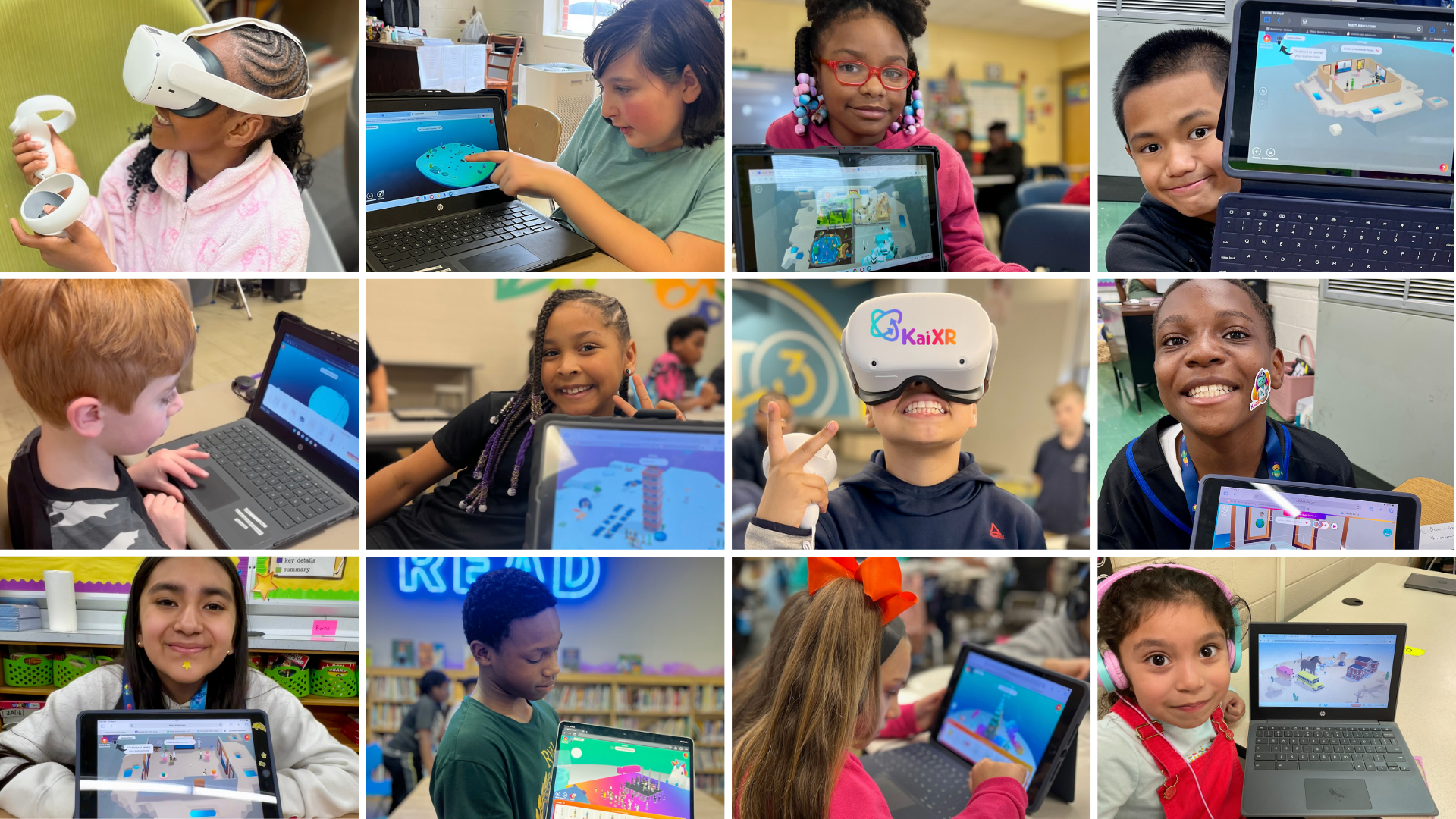
Education is evolving to meet the demands of a changing world, but the core mission remains the same: preparing students for a successful and productive future. Students graduating after 2030 face a different landscape than past generations, requiring a blend of traditional academic excellence and modern fluency in computer science, AI, and STEM.
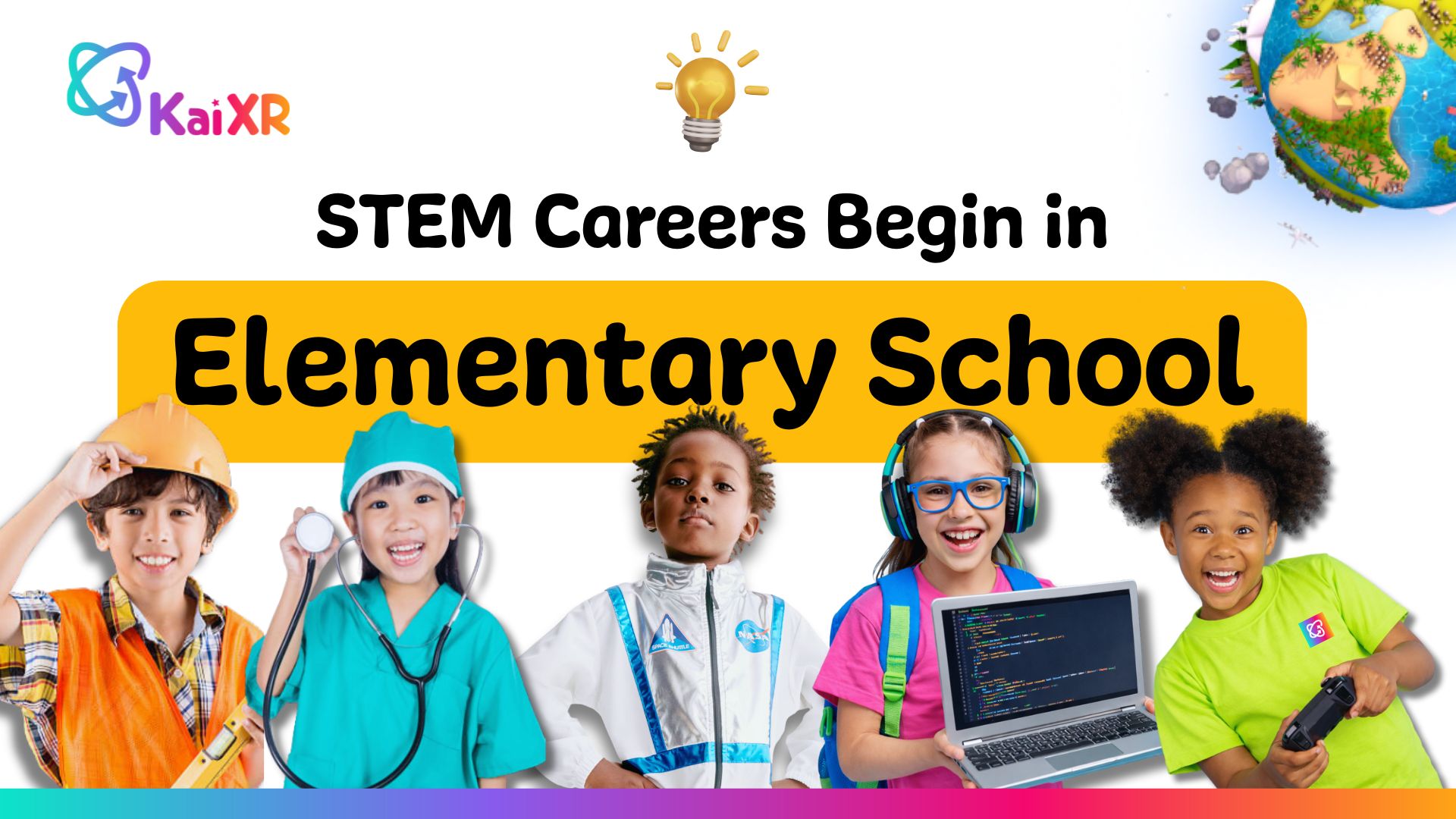
Kai XR believes STEM careers begin in elementary school.
When we wait until high school to introduce STEM concepts and digital skills, we miss the window where student identities are formed. Research shows that students who engage with STEM before middle school are 3x more likely to pursue STEM degrees. By integrating Career and Technical Education (CTE) opportunities into daily learning—whether in a classroom, a summer camp, or an after-school club—we ensure every student has the foundation to pursue high-growth pathways.
.png)
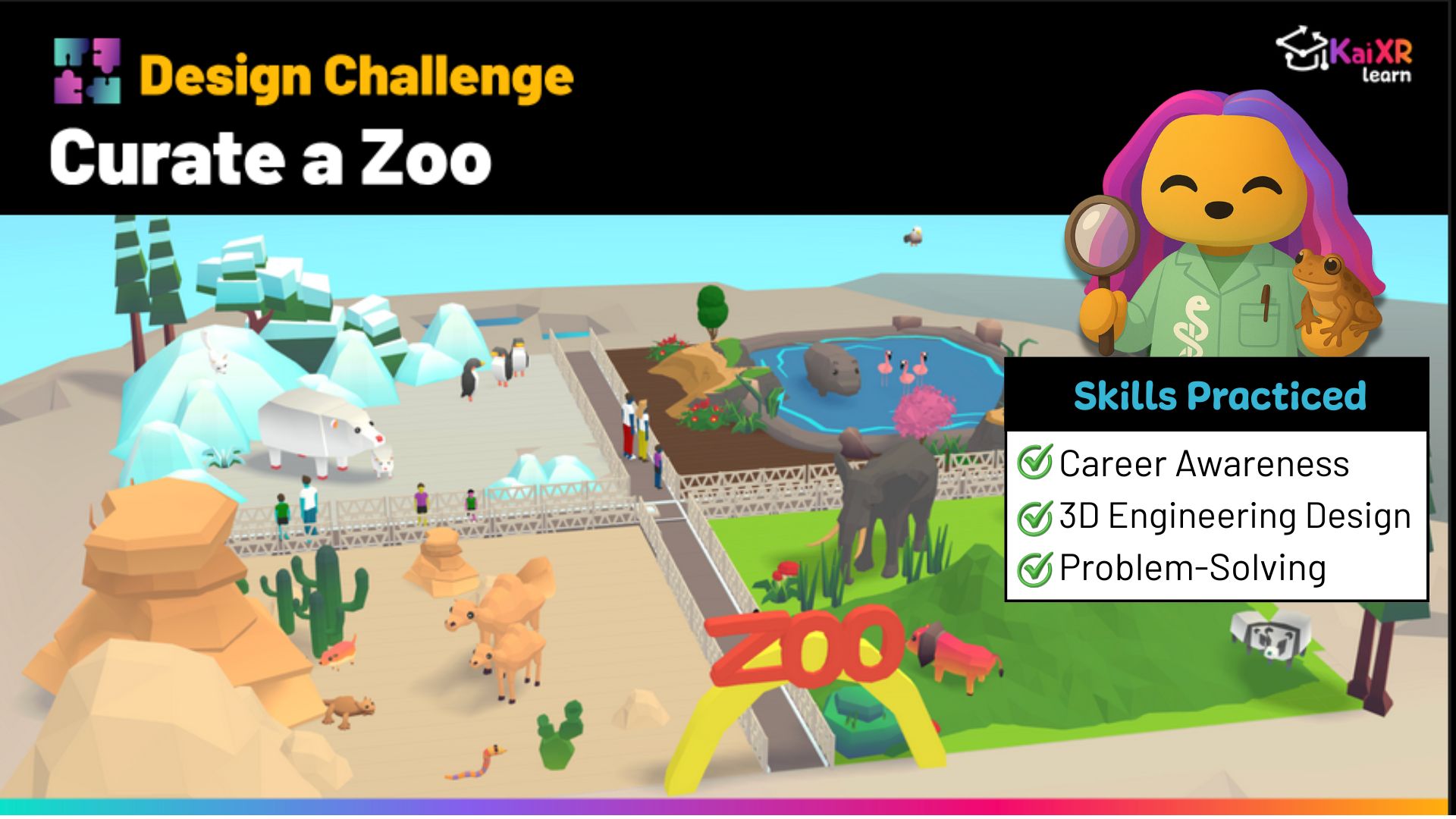
Kai XR’s learning platform helps students build real-world skills by turning lessons into hands-on experiences. As students complete Learning Adventures (lessons), they earn points that reflect their growth across three key areas: Computer Science, STEM, and Career Readiness. These three areas will be essential in preparing students to succeed in the future.
.png)
Digital fluency is no longer optional; it's as fundamental as reading and writing. Many states now require computer science courses before graduation because technology powers every industry.
Kai XR focuses on the following three areas to help students understand and shape the technology around them:
.png)
In a textbook, a cell is a labeled diagram with parts to memorize. In Kai XR, students step inside a cell, navigate between organelles, and watch mitochondria generate energy in real time. This is the difference between learning about science and experiencing it—and that difference determines whether students see themselves as future scientists.
When STEM concepts remain abstract, students disengage. When they become tangible experiences, students build the confidence and persistence needed to tackle complex problems.
Kai XR focuses on the following three areas to ensure students develop the skills to solve tomorrow's challenges:
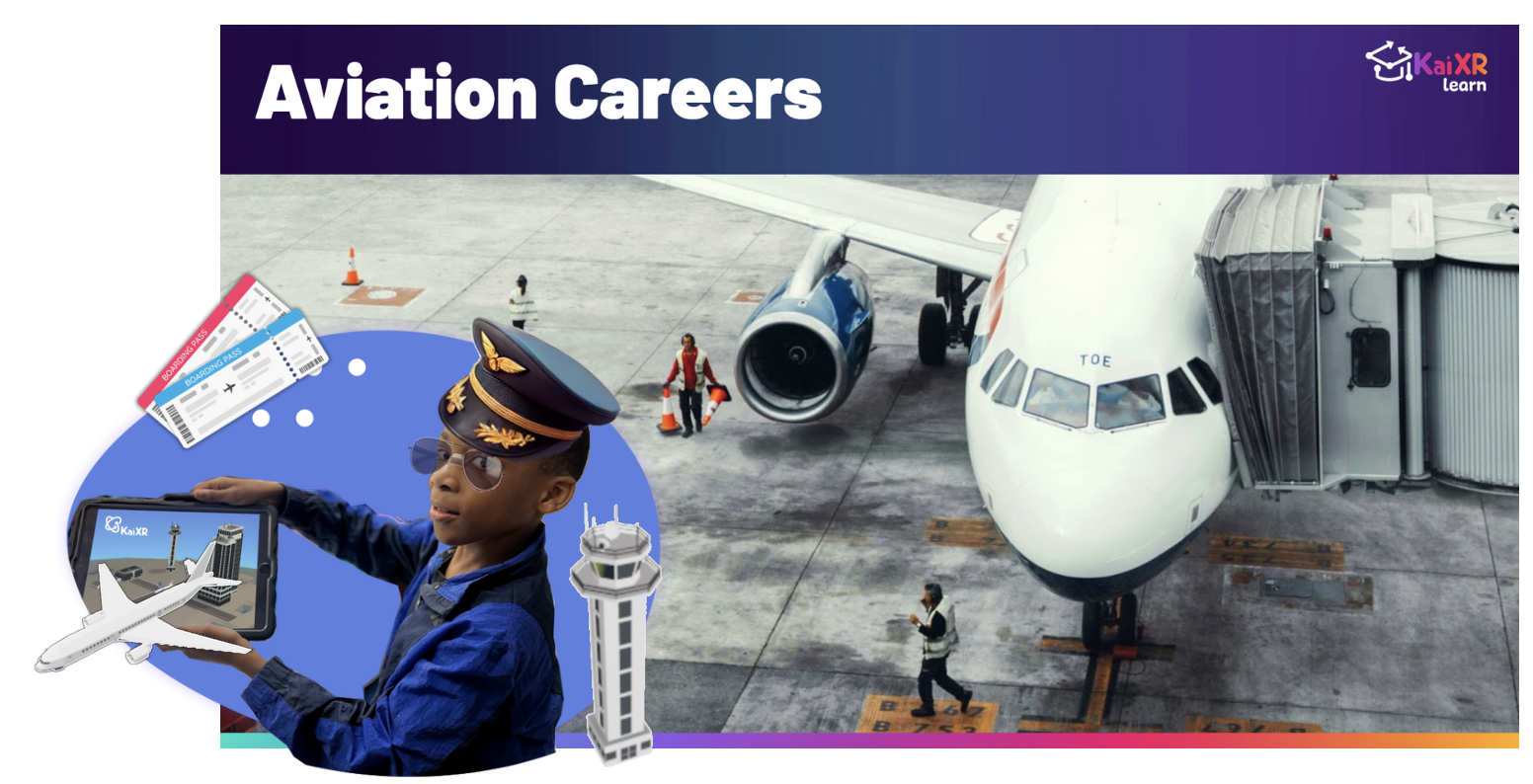
One of the greatest predictors of student motivation is understanding the "why" behind their learning. Students can't be what they can't see. When students lack exposure to diverse career paths, they struggle to envision themselves in those roles. This limits their aspirations before they even begin.
Kai XR focuses on the following three areas to bridge the exposure gap and introduce CTE opportunities early:
.png)
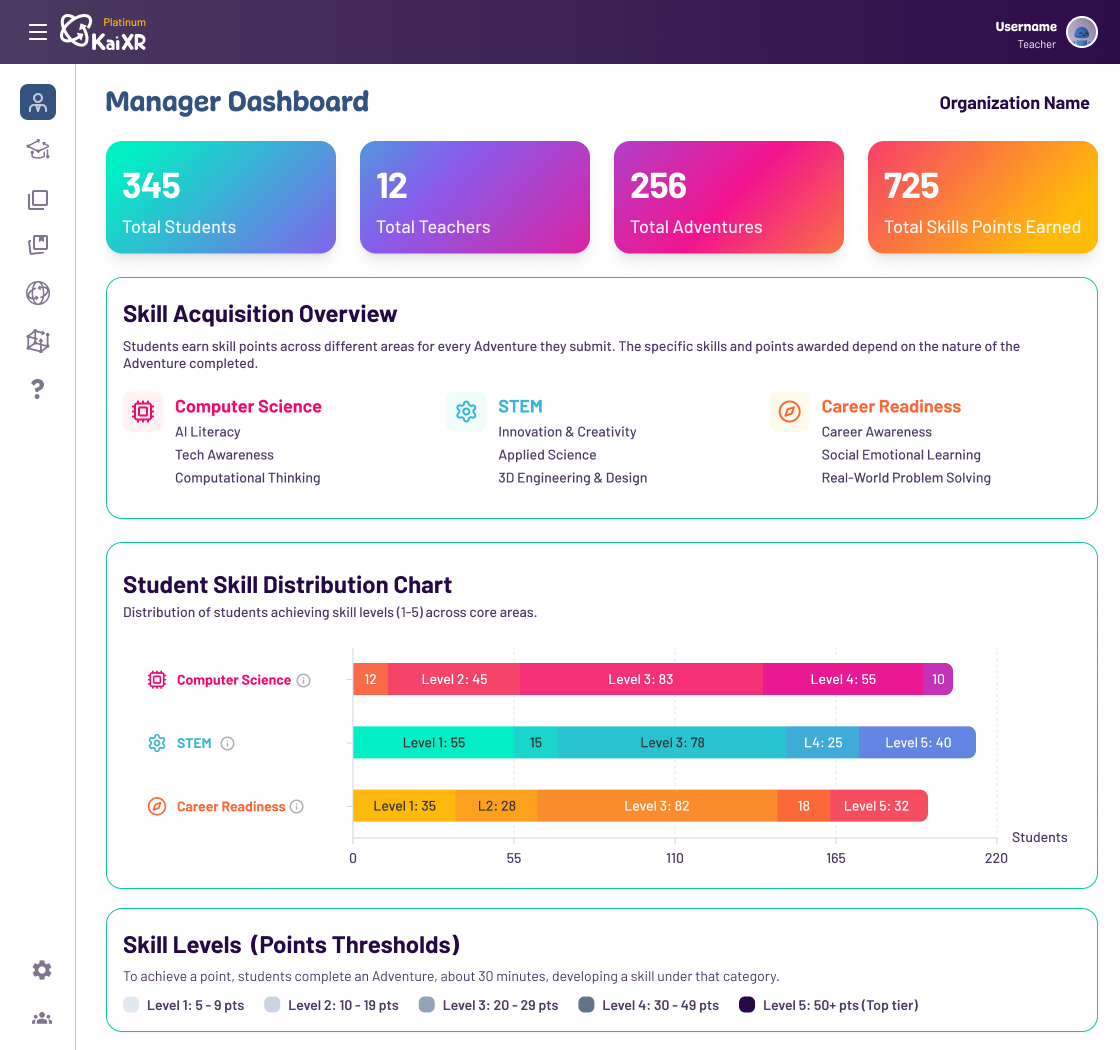
The workforce is moving toward skills-based hiring, and colleges want to see what students can actually do, not just how long they sat in class. To align with these trends, Kai XR gives you clear data on skill development allowing you to prove student growth in the areas that matter most for career readiness.
With each Adventure completed, students earn points across our three focus areas: Computer Science, STEM, and Career Readiness. Kai XR gives detailed reporting showing exactly how students are building the specific skills that employers and colleges value most. You see real-time data on how students are developing CS skills, which are building STEM skills, and where opportunities exist for additional skill building.
Kai XR avatars let students dream out loud. As students earn skills points, they unlock career accessories for their avatars such as a pilot helmet, chef's hat or a stethoscope. Each accessory is a visual representation of their progress while allowing them to imagine bright futures. Their avatar becomes their guide as they navigate Kai XR World.
.png)
The window to influence a student’s career identity closes much earlier than most realize. Research indicates that by the time students reach the eighth grade, many have already self-selected out of STEM pathways because they lack the identity or exposure to see themselves in those roles. High school is too late to wait. If we wait until high school to provide these experiences, we are narrowing the opportunity pipeline.
When a community invests in early STEM and CTE career exposure, the results are measurable. Districts that implement these pathways see higher graduation rates and stronger local workforce pipelines. Kai XR is the only platform designed to meet students where they are, turning abstract state requirements into the tangible, "fail-forward" experiences that define the next generation of leaders. Investing in Kai XR ensures your students possess the skills and confidence to lead the 2030 economy and beyond.
Skills based learning starts with Kai XR. Request a quote today.
There’s so much for you and your students to explore. All you need to do is start. Try out Kai XR on your smart device, tablet, VR headset, or laptop. We’ll be your guide!


Dive deeper into the metaverse, XR, VR, and all the tech bringing the next generation of learning to your classroom.


.png)