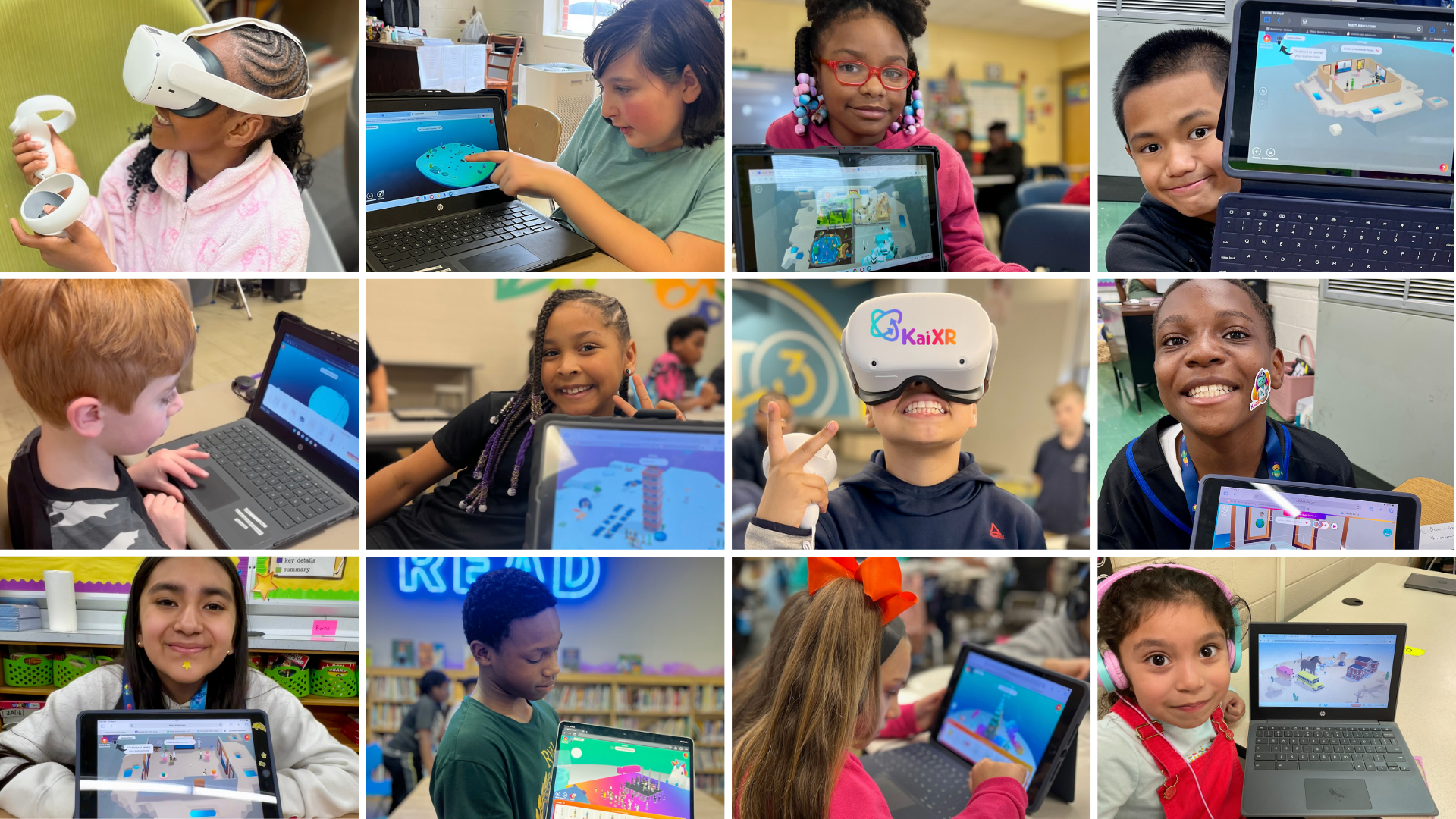
Kai XR is an immersive learning platform where students step into real-world scenarios across math, ELA, science, and STEM, building skills, confidence, and independence through discovery. Through virtual field trips, 3D makerspaces, discovery games, and over 200 project-based lessons, students apply what they are learning in class to real-world challenges in ways that keep them focused and engaged.
After four years of Kai XR implementation in schools across the nation, a clear pattern began to emerge. Special education (SPED) teachers in both small-group and inclusion settings reported that students with IEPs (Individualized Education Programs, legally required plans outlining learning goals and supports for students receiving special education services) were engaging differently when using the platform. When using Kai XR, students who typically struggled with focus were staying on task. Students who hesitated to participate were contributing.
As this trend became more consistent across districts, educators urged the Kai XR to formally examine the impact. In Fall 2025, LRA Research Associates, an independent research firm, conducted a mixed-methods study examining Kai XR in special education settings.
Researchers used student surveys and one-on-one teacher interviews to evaluate how Kai XR supports diverse learning needs, instructional goals, and progress toward IEP-aligned outcomes. The study was designed to better understand why this shift was occurring and how Kai XR was influencing measurable progress toward IEP-aligned goals
Special education teams are expected to deliver individualized instruction, improve academic achievement, and support behavior and executive functioning—all while maintaining compliance and documentation. At the same time, many instructional tools are not designed for how neurodivergent learners access information, sustain attention, or demonstrate understanding.
For students with autism, ADHD, attention deficits, and behavior challenges, traditional text-heavy platforms can increase frustration, reduce engagement, and limit independence. In practice, this often results in more adult prompting, more redirection, and fewer instructional minutes spent on skill-building.
Kai XR was developed to reduce these barriers by combining structured routines, multi-sensory learning, and real-world relevance. The immersive learning platform targets three skill areas that frequently appear across IEP goals and directly influence student access to grade-level learning:
The following five findings from the study highlight how Kai XR supports progress toward these outcomes in both small-group and inclusion settings.
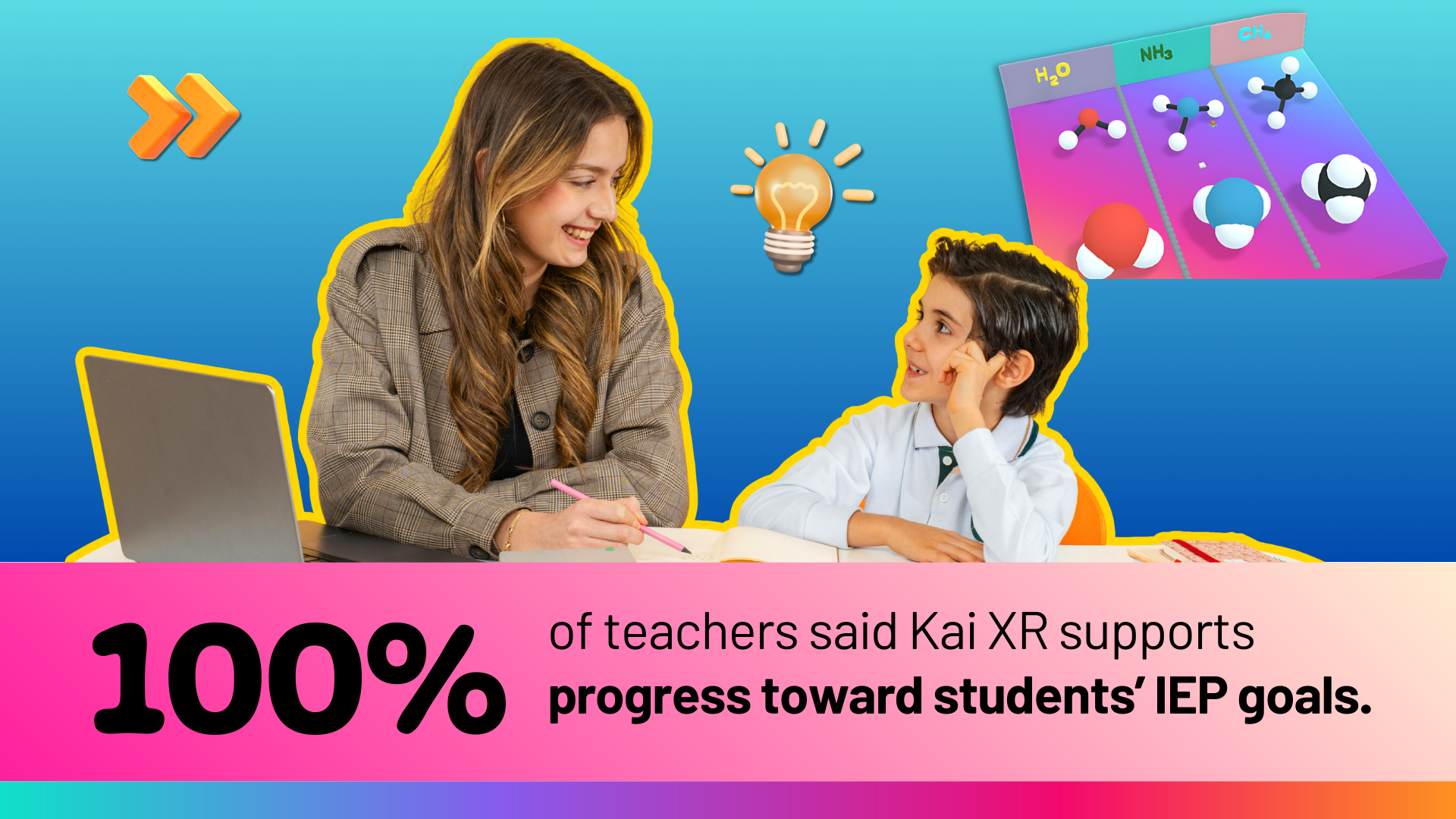
100% of participating teachers agreed that Kai XR supports students’ progress toward their IEP goals.
Across interviews, every teacher reported that Kai XR Learning Adventures could be used to support IEP-aligned skill development. Teachers specifically highlighted IEP goals related to:
Teachers noted that Kai XR supports these goals through structured, content-specific Learning Adventures that require students to actively read, analyze information, answer questions, and apply skills within interactive environments. The combination of guided instruction, embedded questions, and hands-on activities reinforces comprehension and executive functioning skills within a motivating context.
Rather than isolating skills in worksheets or drill-based practice, Kai XR integrates them into real-world, career-connected tasks. This allows students to practice IEP-aligned goals while remaining engaged and independent.
83% of students with IEPs reported that Kai XR made them want to read more.
This finding is significant in special education settings, where increased reading motivation is often a prerequisite to measurable academic growth.
Kai XR supports comprehension by anchoring literacy instruction in high-interest, career-connected topics such as aviation, healthcare, engineering, and digital literacy. Students engage with text to solve problems and explore real-world pathways, reinforcing a “reading to learn” mindset rather than reading solely for task completion.
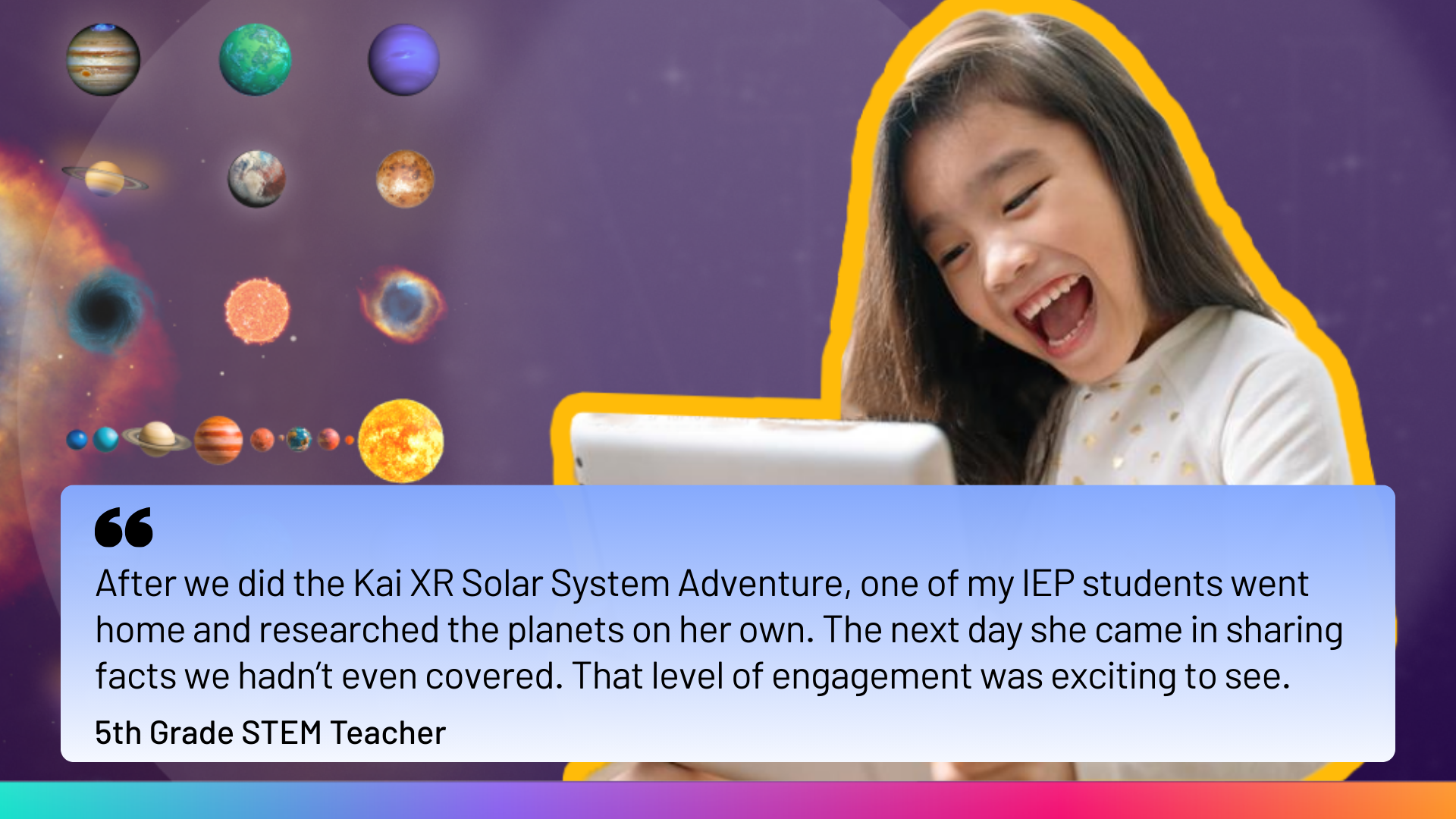
Teachers in the study confirmed that Kai XR’s comprehension-focused Learning Adventures align directly with common IEP goals. Skills highlighted by teachers included:
These skills appear frequently across IEPs and are foundational for long-term academic progress and readiness.
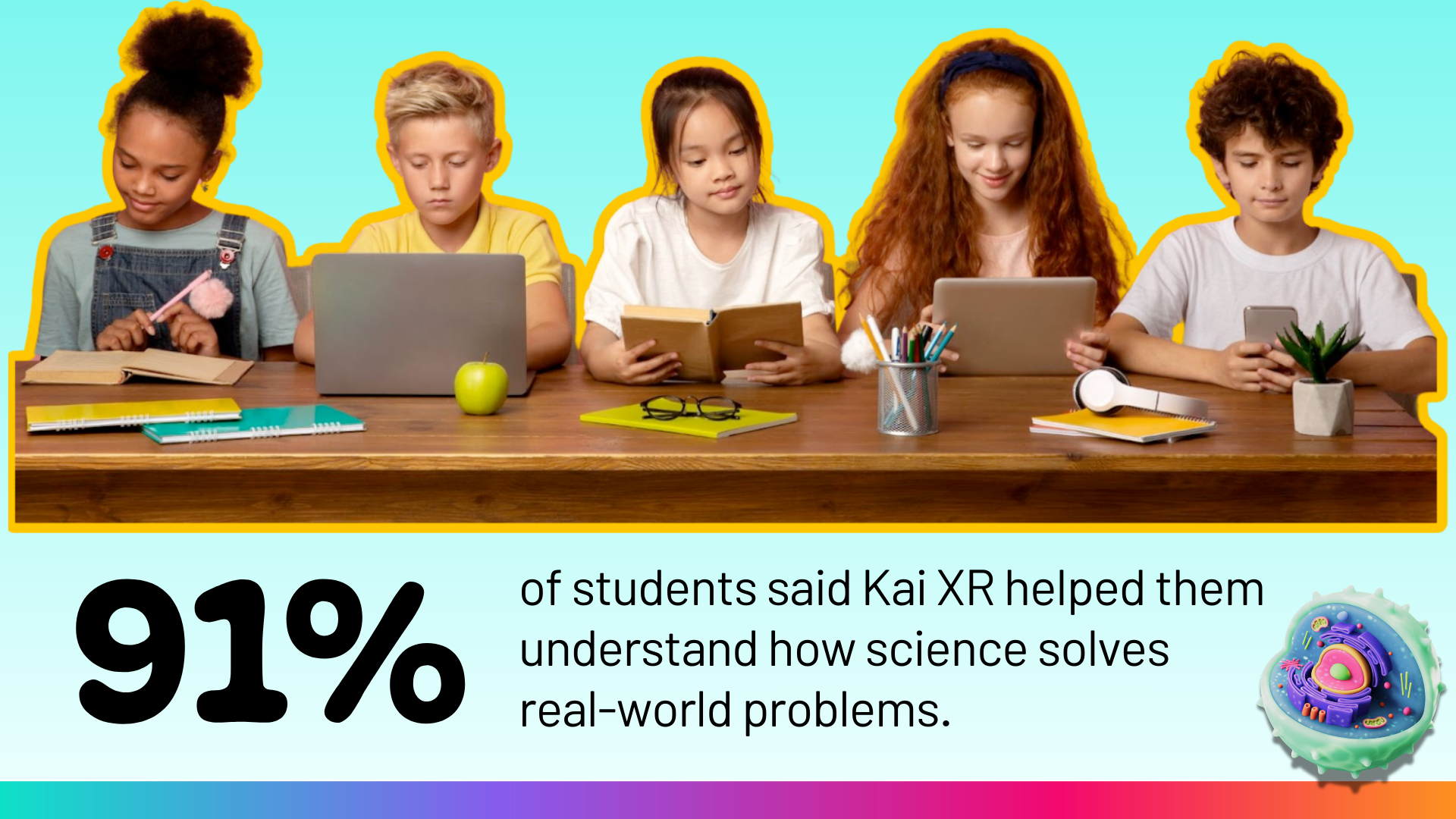
91% of students reported that Kai XR helped them learn how people use science to solve problems in the real world.
This finding is especially relevant for students with IEPs because one of the most persistent barriers is skill transfer. Many students can demonstrate understanding in isolated academic settings, yet struggle to apply concepts in real-world contexts. Kai XR addresses this gap by embedding instruction inside career-connected, problem-based learning experiences.
Career readiness is not only a high school-only priority. It begins with early (elementary and middle school) skill-building in digital literacy, applied STEM thinking, communication, and self-direction. Kai XR strengthens these foundations by blending STEM and literacy into interactive Learning Adventures that connect classroom skills to future opportunity.
Kai XR supports career readiness in three key ways:
Executive functioning goals for students with IEPs often include sustained attention, task initiation, independence, and emotional regulation. The study findings indicate that Kai XR’s structured flow and multi-sensory design provide the predictable routines and engaging format many neurodivergent learners need to remain attentive and productive.
Teachers consistently reported fewer off-task behaviors and reduced redirection when students were engaged in Kai XR. Students who typically struggled to remain seated or focused were described as “very focused,” demonstrating meaningful improvements in attention during instructional time.
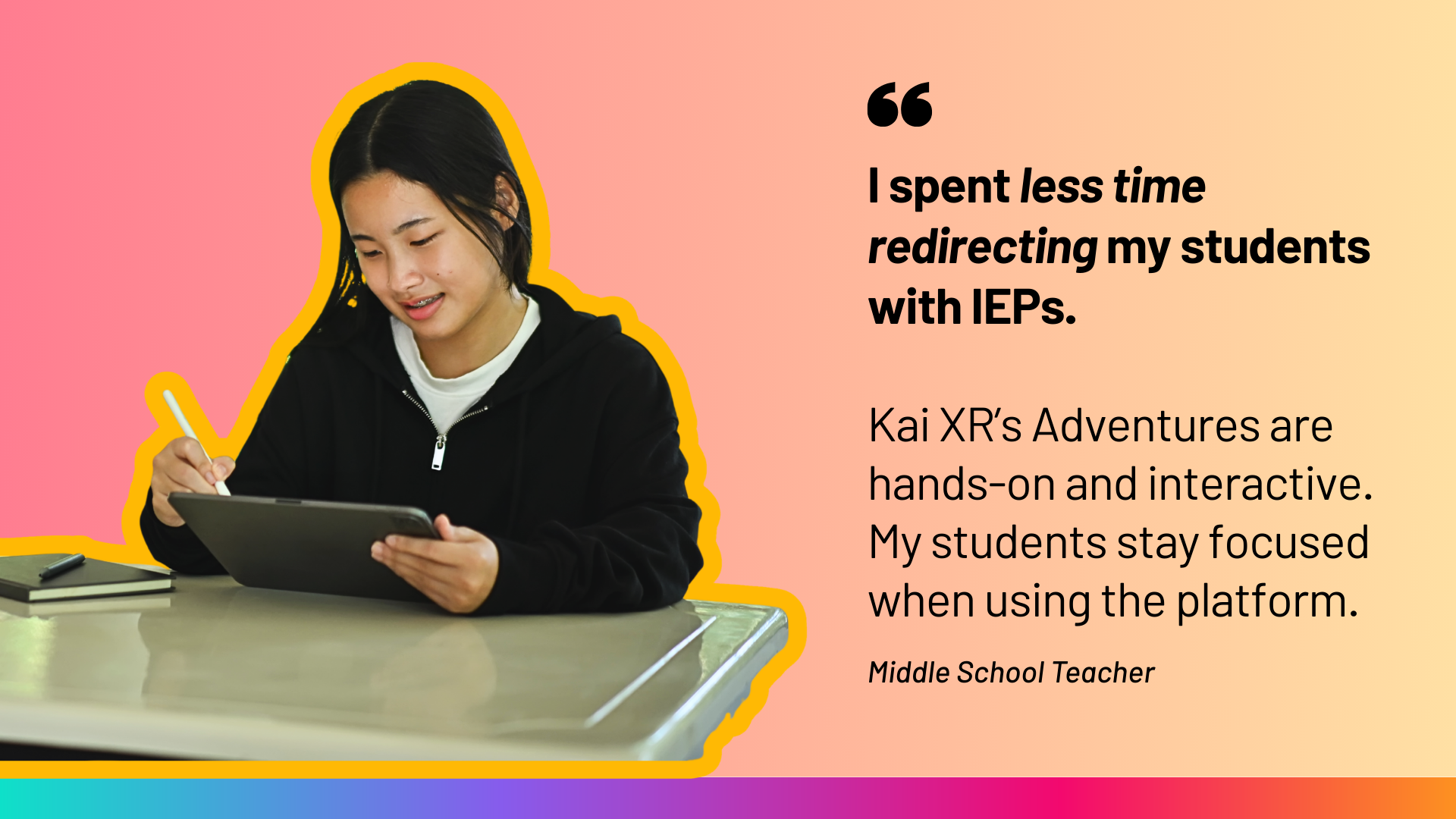
Kai XR supports executive functioning growth in three key ways:
These skills are essential for IEP progress and long-term academic and career readiness.
87% of students reported having fun while learning with Kai XR.
This finding matters because students are more likely to participate, communicate, and take academic risks when they feel safe, included, and engaged. Kai XR creates shared learning experiences where students with IEPs can access the same “wow” moments as their peers through Virtual Field Trips and 3D Makerspace challenges. This reduces stigma, strengthens belonging, and supports IEP goals tied to SEL and communication.
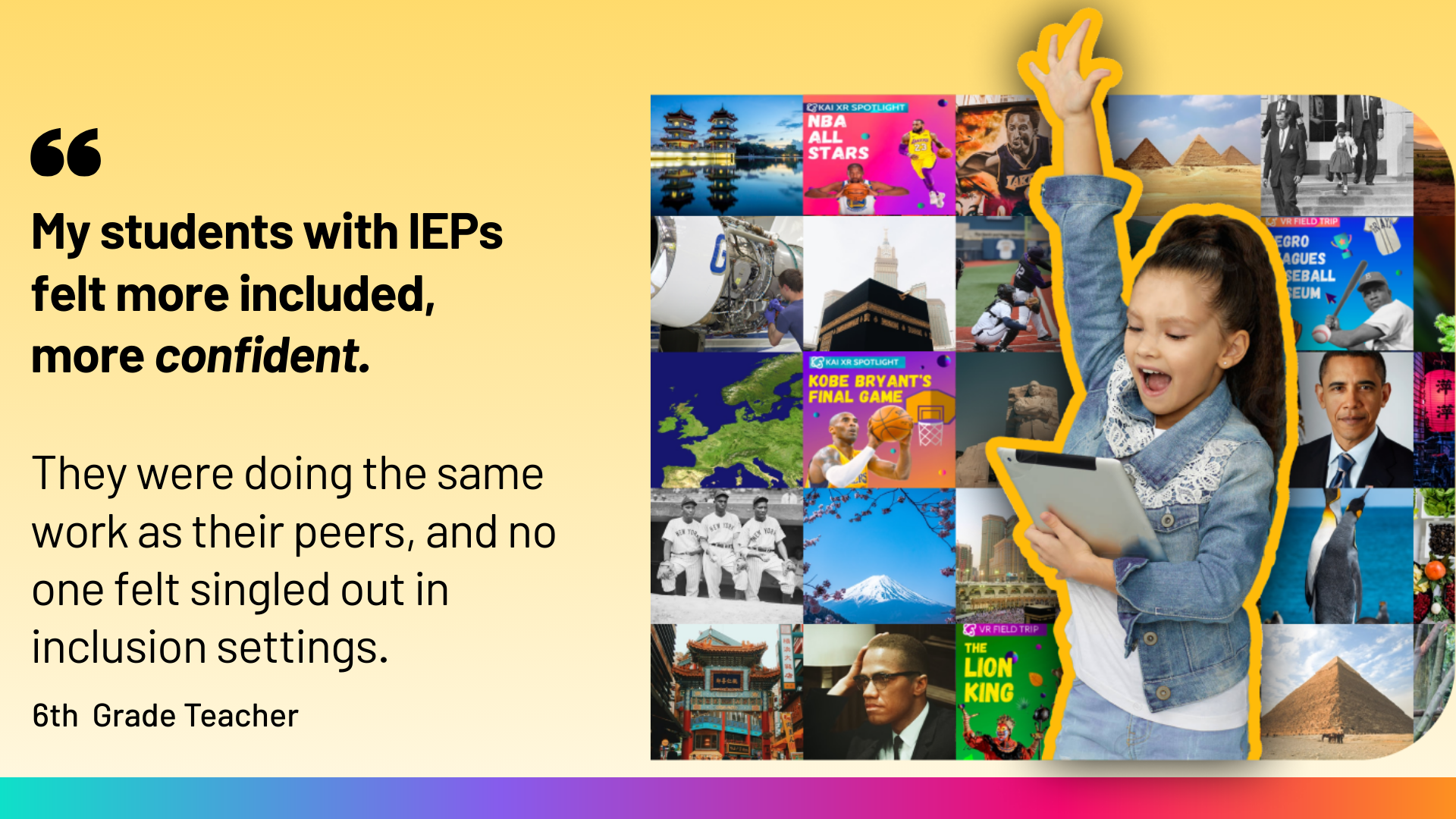
Kai XR supports SEL and peer-based learning in three key ways:
These outcomes strengthen the classroom environment where academic progress becomes full of joy paired with “Aha!” moments.
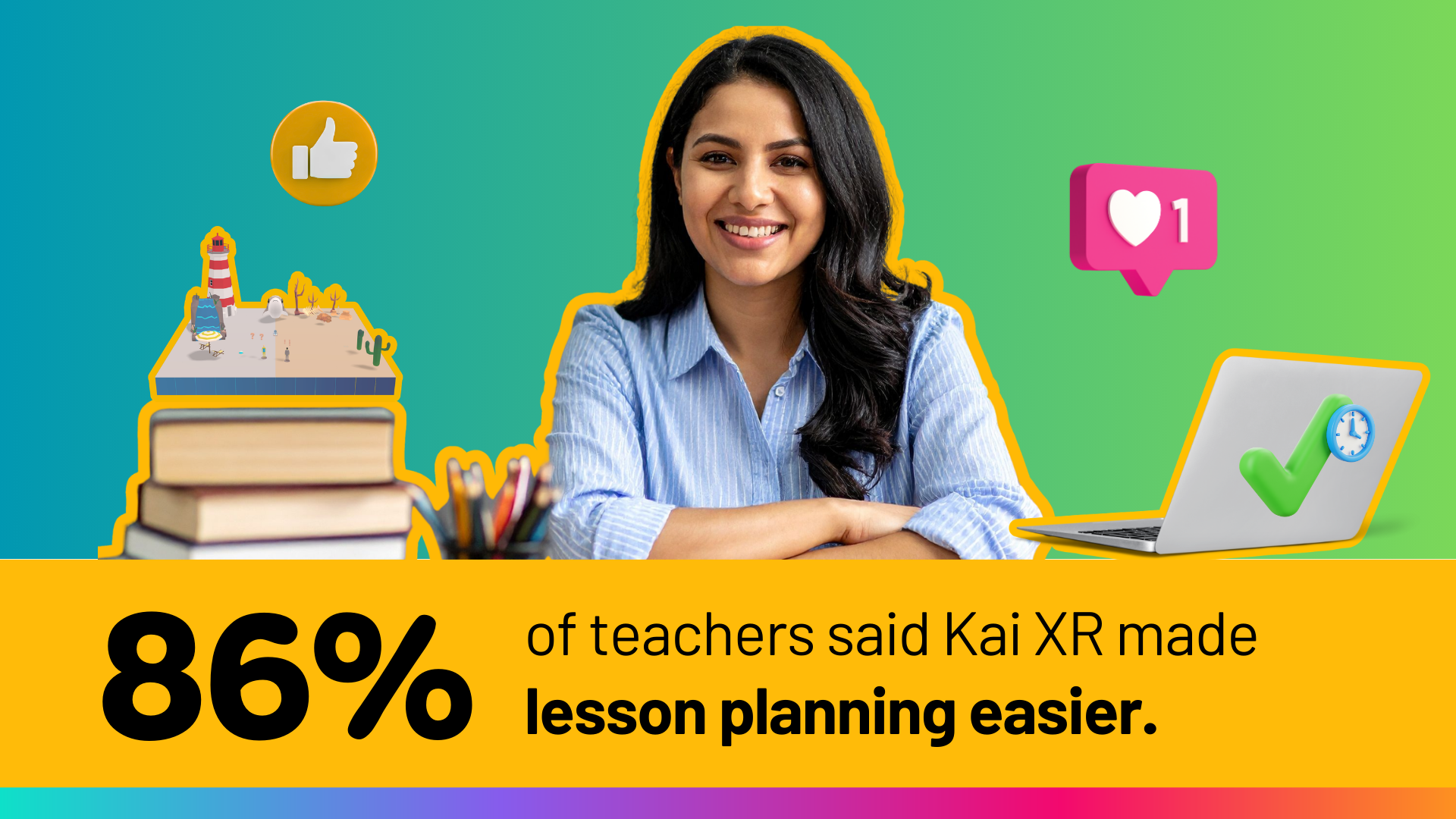
86% of teachers reported that lesson planning was easier when implementing Kai XR.
This finding carries particular weight in special education settings, where SPED teachers manage intensive instructional demands alongside IEP documentation, progress monitoring, and differentiated support.
Researchers found that Kai XR operates as a plug-and-play solution, integrating high-quality content, structured activities, and embedded assessments into one cohesive platform. Teachers described spending less time building lessons from scratch and more time delivering targeted instruction aligned to academic and IEP priorities.
Kai XR increases teacher capacity in three key ways:
By improving planning efficiency and protecting instructional time, Kai XR strengthens implementation and sustainability in special education classrooms.

Research indicates that students with IEPs who used Kai XR demonstrated progress aligned to their IEP goals, particularly in reading comprehension, executive functioning, engagement, and independence.
When students improve their focus, autonomy, comprehension, and confidence, they require fewer intensive interventions and less frequent redirection. Instruction becomes more productive. IEP goals become more attainable. Classrooms become more stable.
Across the study findings, Kai XR consistently supported the core conditions that drive special education growth:
As students demonstrate sustained growth in these areas, the intensity of adult prompting and behavioral redirection can decrease. Teachers gain instructional time for deeper intervention and individualized support. Over time, consistent progress strengthens the data used in student support and transition decisions.
The findings suggest Kai XR strengthens both student outcomes and system capacity by improving engagement, independence, and comprehension together.
There’s so much for you and your students to explore. All you need to do is start. Try out Kai XR on your smart device, tablet, VR headset, or laptop. We’ll be your guide!


Dive deeper into the metaverse, XR, VR, and all the tech bringing the next generation of learning to your classroom.


.png)