
.png)
Get ready to make history! In this Adventure, you’ll explore the life and legacy of Dr. Martin Luther King, Jr.Then, you will reflect on King’s accomplishments as you use your creativity to design a virtual monument that honors King’s memory and inspires change.
.png)
Dr. Martin Luther King Jr., a towering figure in American history, was born in 1929 in Atlanta, Georgia. He dedicated his life to working for racial equality, believing that everyone deserved to be treated with dignity and respect.
One of his most significant actions was the Montgomery Bus Boycott in 1955. This boycott began in Montgomery, Alabama, after Rosa Parks refused to give up her seat to a white passenger. At the time, laws in Montgomery required Black people to sit in the back of the bus, and if a white person needed a seat, Black passengers were expected to give up their seats.
Rosa Parks's courageous refusal to comply sparked a movement, as Black citizens boycotted the city buses, demonstrating their strength and unity in demanding an end to segregation. Dr. King, a young pastor at the time, emerged as a leader of the boycott, which lasted for over a year and ultimately led to the desegregation of the Montgomery bus system, a significant victory for the Civil Rights Movement.
.png)
King's leadership inspired thousands to join the fight against racial injustice. In 1963, he led the historic March on Washington, where he delivered his famous "I Have a Dream" speech. In this powerful address, he declared,
“I have a dream that my four little children will one day live in a nation where they will not be judged by the color of their skin but by the content of their character.”
This vision of a just and fair society expressed King's hope for a better future for all Americans. The March on Washington was a powerful event that helped bring about the Civil Rights Act of 1964, a law that made it illegal to discriminate against people based on their race. This meant that everyone, no matter their skin color, could now go to the same schools, eat at the same restaurants, and use the same public facilities.
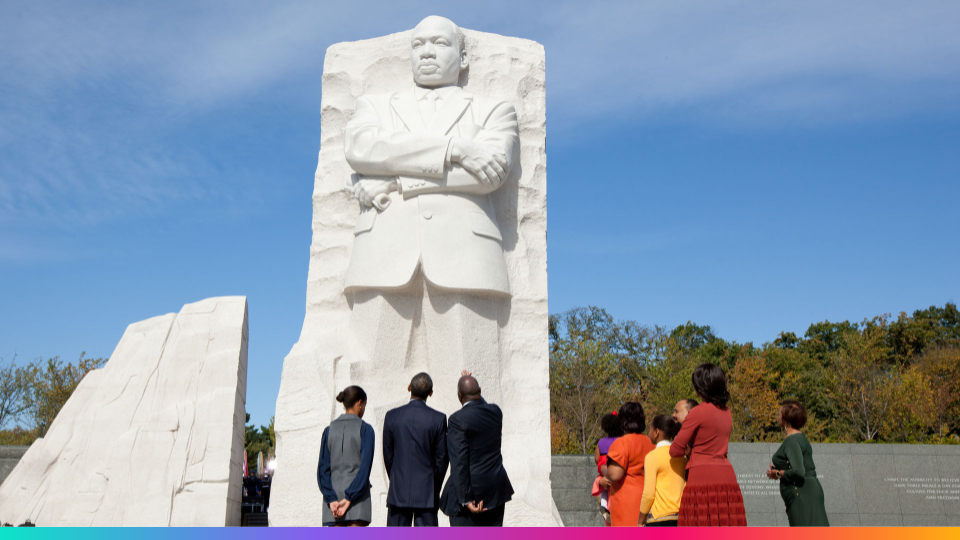
Despite facing threats and violence, Dr. King continued to fight for justice. He led the Selma to Montgomery marches in 1965, demanding voting rights for African Americans. These marches brought national attention to the issue of voting rights and ultimately resulted in the passage of the Voting Rights Act of 1965, which ensured that all citizens, regardless of their race, had the right to vote.
Dr. King's legacy continues to inspire generations. Across the world, many people honor his memory by helping others and working to create a fairer world for everyone. His life serves as a powerful reminder that individuals can make a difference in the fight for justice and equality.
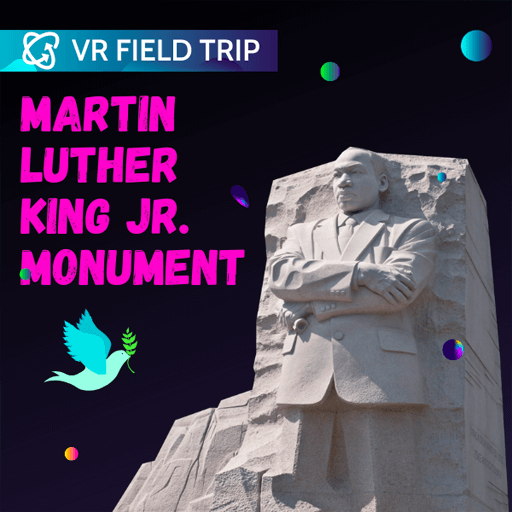
Take a field trip to National Mall in Washington, DC to explore the Martin Luther King, Jr. monument while listening to the words of King’s iconic “I Have a Dream” speech.
Click Explore Now.

Move left, right, forward, backward, up, or down
.gif)

Spin or
turn around
.gif)

Make smaller
or larger
.gif)


